See prices From 16.5 EUR · Free cancellation available
Contents
If you’re wondering seville when to visit, I’d settle on spring or autumn before anything else, and I say that having weighed every month against the others. April, May, late September and October give you warm days without the heat that defines Seville’s reputation for brutal summers, and that single tradeoff shapes almost everything else about your trip, how much walking you can realistically do, how late you can stay out, even how enjoyable the river feels.
This page walks through the climate month by month so you can match your dates to what actually matters to you, whether that’s dodging the worst heat, catching a festival, or finding the quieter shoulder weeks. It sits alongside the rest of the practicalities in the Seville travel guide, and for the packing side of this same decision, the dress code page covers what to wear depending on which season you land in.
What’s the Weather Like in Seville Month by Month?
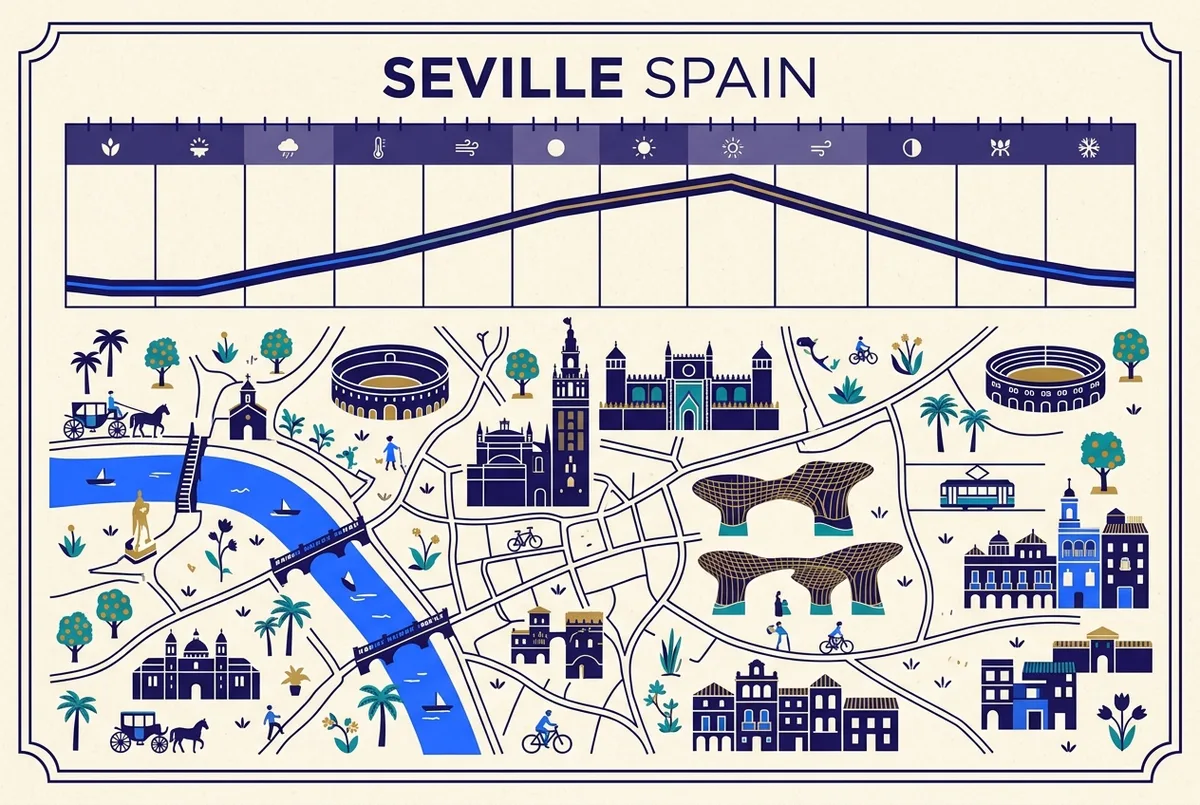
Winter, December through February, stays mild by most standards, daytime highs typically in the mid teens Celsius, with cool evenings and the occasional rainy stretch. Spring, March through May, warms quickly, and by late April you’re looking at comfortable mid twenties that climb into the thirties by June. Summer, June through August, is where Seville earns its reputation: July and August regularly push past 40 degrees Celsius, and I wouldn’t underestimate how much that limits a full day of sightseeing. Autumn, September through November, cools back down gradually, with late September still warm and October settling into genuinely pleasant mid twenties.
I’d treat this pattern as the backbone of your planning rather than a footnote, since the difference between a June trip and an October trip is bigger here than in most European cities.
Check prices & dates
Ready to visit?
Book your tickets in advance: popular time slots sell out.
Spring gives you the sweet spot: warm enough for shorts and short sleeves most days, cool enough that a few hours of walking doesn’t wear you down by noon. April and May also happen to be peak festival months, Semana Santa and the Feria de Abril both land in this window most years, which brings real energy to the city but also real crowds and higher accommodation prices.
If festival crowds aren’t your priority, I’d aim for early May specifically, after the Feria wraps but before the heat properly sets in. Spring also happens to be a good window for arrival logistics generally, and the airport transport page is worth a quick read either way, since bus and taxi wait times shift a little with the season’s tourist volume.
Why Would You Visit Seville in Autumn Instead?
Autumn is my other top pick, and for some travelers I’d actually rate it slightly above spring, since late September and October carry less festival crowding while still delivering comfortable, warm days. The light also tends to be gorgeous in the early evening this time of year, which matters if golden hour photos are part of why you’re here.
The tradeoff is fewer big public events compared to spring, though I don’t think that’s much of a loss given how much calmer the main sights feel without the festival rush layered on top of normal tourist traffic. Mild autumn weather also makes it a comfortable window if you’re combining Seville with another city on the same trip, and the Seville to Valencia train page has the numbers if that particular route is on your itinerary.
Should You Avoid Visiting Seville in Summer?
I wouldn’t say avoid entirely, but I’d go in with realistic expectations. July and August heat is genuinely intense, and it changes how you need to structure a day: sightseeing in the morning, an indoor lunch or a siesta style break through the worst of the afternoon, and anything outdoors again once the evening cools. If summer is your only available window, I’d lean into that rhythm rather than fighting it.
Seville weather by month gets noticeably more forgiving the moment September arrives, which is worth keeping in mind if your travel dates have any flexibility at all.
Is Winter a Good Time to Visit Seville?
Winter is underrated, honestly. Daytime temperatures stay mild enough for comfortable sightseeing in a jacket, hotel prices drop from the peak season highs, and the main sights see noticeably shorter queues. The tradeoff is shorter daylight hours and the occasional rainy day, but if budget and crowd avoidance matter more to you than guaranteed sunshine, I wouldn’t rule winter out. Lower hotel prices also tend to free up a bit more of the daily budget, which the food and drink budget page can help you plan around regardless of season.
What’s the Best Season for a River Cruise in Seville?
This is where the timing question gets specific to this site’s main activity. Spring and autumn also happen to be the best season for a Guadalquivir river cruise, since the midday heat that makes summer walking rough also makes a midday cruise less pleasant than an early morning or sunset one. If you’re visiting in summer regardless, I’d specifically book an early or late departure rather than a midday slot, and that cluster page breaks down exactly why.
How Does Seville’s Timing Compare to Other Andalusian Cities?
Seville runs its seasonal extremes a notch harder than some of its neighbors, in my experience. Granada sits at a higher elevation and cools down more at night even in summer, while Córdoba, if anything, gets even hotter than Seville during July and August despite being a short train ride away. I’d factor that into a multi stop Andalusia trip rather than assuming the weather behaves the same everywhere, since a date that works comfortably in one city can be noticeably rougher in another.
If your trip spans more than one of these cities, I’d structure the hottest weeks around whichever stop handles heat best, usually the one with easier access to shade, water and air conditioned indoor sights, and save the more exposed walking days for the shoulder season legs of your itinerary.
What If You Can Only Visit During Summer?
Plenty of travelers don’t get to choose their dates, school holidays and work schedules often force a July or August trip whether the weather cooperates or not, so I wouldn’t want anyone reading this to feel like summer rules Seville out entirely. The real fix is restructuring the day rather than avoiding the season: start sightseeing by eight in the morning, retreat indoors or into a long lunch through the early afternoon, and pick back up again once the evening cools toward seven or eight.
I’d also prioritize activities that are naturally suited to the heat over ones that aren’t. A river cruise works especially well here, since you’re seated with a breeze over the water rather than standing on hot pavement, which is exactly why I’d slot one into the hottest part of a summer afternoon rather than save it for later. A shaded museum or the inside of the cathedral fills a similar role for the hours either side of it.
Frequently Asked Questions
What is the best month to visit Seville?
I’d pick April or October specifically, both land in the warm but not brutal window, and October skips the spring festival crowds that can push up accommodation prices.
Is Seville too hot to visit in July?
It’s genuinely hot, often past 40 degrees Celsius, but not impossible if you structure your day around the heat, sightseeing early and late, resting through the hottest hours.
What is the rainiest time of year in Seville?
Winter, particularly December through February, sees the most rainfall, though it’s rarely enough to ruin a trip, just worth packing a light rain layer for.
Is spring or autumn better for Seville?
Both work well. I’d lean slightly toward autumn for fewer crowds, or spring if you want to catch Semana Santa or the Feria de Abril.
My honest recommendation: block out April, May, late September or October if your schedule allows any flexibility at all, and if it doesn’t, don’t let a summer trip stop you, just plan your days around the heat rather than against it.