Seville Travel Guide: Essentials for First-Time Visitors
See prices From 16.5 EUR · Free cancellation available
Contents
Good seville travel tips save you from the small mistakes that quietly eat into a short trip: showing up to the cathedral in shorts and getting turned away, booking your visit for the hottest week of the year, or underestimating how far the airport actually sits from the center. None of these mistakes are dramatic on their own, but they add up, and I’d rather walk you through them now than have you learn them the hard way on day one.
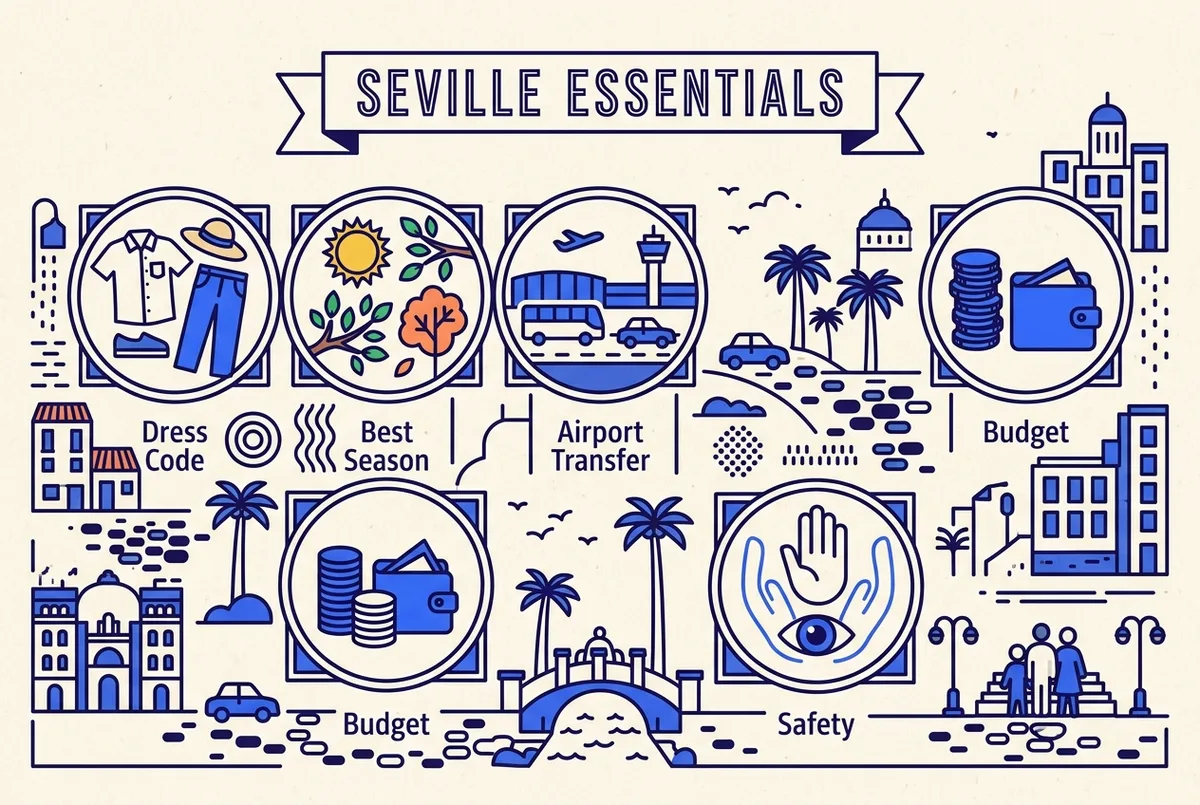
This page is the practicalities checklist underneath everything else on this site: what to wear, when to come, how to budget, how to get around, and how safe the city genuinely is. Each section below links out to a fuller page if you want the deeper version, but I’ve tried to give you the honest short answer here first. Before you get into any of that, it’s worth knowing that most visitors book one easy activity early in their trip to anchor the rest of their schedule around, and a short Guadalquivir river cruise works well for that since you can compare every Seville river cruise ticket by price and duration and book it in minutes rather than hunting for a timed entry slot the way you would for the cathedral.
What Should You Wear in Seville?
Light, breathable clothing covers most of the year here, but I’d pack at least one modest outfit, shoulders and knees covered, specifically for the cathedral and any churches you plan to visit, since several enforce a dress code at the door. Summer heat is genuinely intense, so I’d lean toward loose fabrics over anything tight or synthetic regardless of how stylish it looks in your suitcase.
The full dress code breakdown goes deeper into what works by season and which specific venues enforce cover up rules, including what I’d wear on the boat if a river cruise is part of your plans, since the breeze over the water runs noticeably cooler than the streets.
Check prices & dates
Ready to visit?
Book your tickets in advance: popular time slots sell out.
I’d point most first time visitors toward spring, specifically April and May, or autumn, specifically late September and October. Summer in Seville turns genuinely brutal, often pushing well past 40 degrees Celsius in July and August, and that heat doesn’t just make walking uncomfortable, it actively shortens how long you can comfortably spend outdoors at any single sight.
Winter here is milder than most people expect and a perfectly workable time to visit if your schedule doesn’t allow for the shoulder seasons. The best time to visit page breaks the climate down month by month if you want the full picture before picking your dates.
How Do You Get from the Airport to the City Center?
Seville’s airport sits around ten kilometers from the historic center, which is close enough that I wouldn’t overthink the transfer, but far enough that I wouldn’t assume you can simply walk or grab a quick taxi for a couple of euros either. The airport bus is the budget option, a taxi is faster and more convenient if you’re arriving with luggage or late at night, and ride share apps operate here too if that’s your preference.
The airport transport page compares the bus, taxi and ride share options with approximate fares, which I’d check before you land so you’re not working it out jet lagged at the arrivals hall.
Where Do Cruise Ships Actually Dock in Seville?
This genuinely trips people up. If you’re arriving on an ocean cruise ship, it does not dock in central Seville, since the river channel isn’t deep enough for large vessels that far inland. Ocean ships actually dock much further downriver, closer to Sanlúcar or near Cádiz, with a bus transfer into the city itself. That’s a completely different thing from the short river sightseeing cruise this site covers, which departs from right in the historic center near the Torre del Oro.
This page clears up that confusion in full, and I think it’s worth reading even if you’re not arriving by ocean cruise, since the mix up comes up often enough in forums and comment sections that I’d rather you understand the distinction before you plan around it.
How Much Should You Budget for Food and Activities?
Seville runs cheaper than a lot of major European capitals, but I wouldn’t assume everything is a bargain either. Tapas and a glass of wine or a caña at a neighborhood bar cost noticeably less than a sit down restaurant meal in a tourist heavy square, and I’d lean toward the former if you want to stretch your daily budget further without feeling like you’re missing out.
The food and budget page walks through realistic daily costs and a short section on attraction ticket prices, including where a short river cruise sits relative to the bigger ticket sights like the cathedral and the Alcázar.
Is Seville Safe for Tourists?
Generally, yes, and I wouldn’t let safety concerns be the thing that talks you out of visiting. Seville sees the usual tourist city issues, pickpocketing in crowded areas and the occasional overpriced tourist trap restaurant, but I’d call it a comfortable, walkable city overall, including in the evening in the main tourist areas.
The safety page covers the specific pickpocket hotspots worth knowing about and some general reassurance for anxious first time travelers, including why I think a short, supervised activity like a river cruise is a genuinely low risk way to see the city if you want one easy win early in your trip.
Do You Need to Speak Spanish to Visit Seville?
Not really, especially in the main tourist areas, where English is common at hotels, major attractions and most restaurants that see regular foreign visitors. That said, I’d learn a handful of basic phrases, hello, please, thank you, the bill, since even a small effort tends to get a warmer response, and it helps in the less touristy neighborhoods where English is less reliably spoken.
I wouldn’t let a language gap stop you from wandering beyond the main sights either. Seville is forgiving enough for pointing at a menu or using a translation app if a conversation genuinely stalls.
Do You Need a Visa to Visit Spain?
For most visitors from the EU, the UK, the US, Canada and a long list of other countries, no visa is required for a short tourist stay, just a passport that’s valid for the length of your trip. I’d still double check the current requirement for your specific nationality before booking anything, since rules do shift and I’d rather you confirm it directly than rely on a blanket statement that may not cover your situation.
If you’re arriving from outside the EU, I’d also keep an eye on how much time you have left on your passport’s validity, since some countries require several months of validity beyond your travel dates, a detail that’s easy to overlook until you’re already at check in.
How Does Siesta Affect Shop and Restaurant Hours?
This genuinely catches first time visitors off guard. Plenty of smaller shops, and some restaurants, close for a few hours in the early afternoon, roughly between 2pm and 5pm, before reopening in the evening. I wouldn’t plan an afternoon of boutique shopping around this window, since you’ll find more closed doors than you expect, especially outside the main tourist streets where shops cater more to local schedules.
Restaurants follow a different but related rhythm: lunch service often runs later than visitors expect, starting around 1pm or 2pm, and dinner rarely gets going before 8pm or 9pm. I’d adjust your meal timing expectations accordingly rather than showing up for dinner at 6pm and finding half the kitchens not yet open. Major attractions, the cathedral and the Alcázar among them, generally stay open through the afternoon regardless, so sightseeing itself isn’t affected the way shopping and dining are.
How Do You Get Around Within Seville Itself?
Walking covers more ground than you’d expect, since the historic center is compact and mostly flat, and I’d default to it for anything within the old town, Santa Cruz and the riverside promenade. The heat is the real limiting factor here rather than distance, so I’d walk in the morning and evening and lean on other transport during the hottest midday hours in summer.
Seville also has a solid public bike share system and a single tram and metro line that cover a handful of useful routes, though neither is essential if you’re staying mostly within the historic core. Taxis and ride share apps are affordable and easy to flag down if your feet give out or you’re heading somewhere slightly further out, like Triana across the river or one of the Expo ‘92 pavilion sites. I would not bother renting a car for time spent inside the city itself; parking is scarce and several streets in the old town restrict vehicle access entirely.
What Should a First Timer Prioritize on a Short Trip?
If I only had two or three days, I’d prioritize the Cathedral and Giralda tower, the Real Alcázar, a wander through the Santa Cruz and Triana neighborhoods, and one easy activity that doesn’t need advance timed entry to fit around everything else. A short Guadalquivir river cruise fills that last role well, about an hour long, departing near the Torre del Oro, and genuinely useful as a flexible gap filler on whichever afternoon or evening ends up with a free hour.
I’d book the big ticket, timed entry sights, the cathedral and the Alcázar especially, before you arrive, since both can sell out specific entry slots during busy periods. The river cruise, by contrast, is the one activity on this list I’d leave until you’re actually in the city deciding how your days are shaping up.
How Does Seville Compare to Granada or Córdoba for a First Visit?
If this is your first trip to Andalusia and you’re trying to decide where to base yourself, Seville offers the widest range of things to do within the city itself without needing a day trip, which makes it a sensible home base even if you plan to see Córdoba, Granada or Ronda as side trips. The day trips overview covers how those options stack up if you have a free day or two to spend beyond the city.
Within Seville itself, the things to do guide is the better next stop once you’ve got the practical basics on this page sorted, since it covers the actual sights, neighborhoods and experiences worth building your itinerary around.
How Does Money and Tipping Work in Seville?
Card payment is widely accepted at restaurants, shops and major attractions, but I’d still carry some cash for smaller bars, markets and a handful of the more traditional tapas spots that still prefer it, especially for a small round of drinks. ATMs are easy to find throughout the center, though I’d avoid the standalone currency exchange booths near the busiest tourist streets, since their rates tend to run worse than a bank ATM’s.
Tipping isn’t the same built in expectation here that it is in some other countries. Rounding up the bill or leaving small change for good service is appreciated but not required, and I wouldn’t feel obligated to calculate a strict percentage the way you might elsewhere. For something like a river cruise or a guided tour, a small tip for a guide who genuinely added to the experience is a nice gesture, but again, not an expectation anyone will push on you.
One practical note I’d pass along: contactless card payment is extremely common here, which makes small purchases, a coffee, a bus ticket, straightforward even without cash on hand. I’d still keep a small cash buffer for the exceptions, since nothing derails a relaxed afternoon quite like finding the one bar that doesn’t take cards right when you’re ready to order.
What’s the Biggest Mistake First Time Visitors Make in Seville?
Underestimating the summer heat, by a wide margin. I’ve seen more trips derailed by trying to power through a midday sightseeing schedule in July than by any other single planning mistake on this list. If you’re visiting outside the shoulder seasons, I’d restructure your day around the heat: sights and walking in the morning, a long indoor lunch or a siesta style break in the early afternoon, and anything outdoors again once the evening cools down.
The second most common mistake, in my experience, is trying to see too much in too short a stay. Seville rewards a slower pace better than a checklist approach, and I’d rather you properly enjoy three sights than rush through six.
A third mistake worth naming is treating every activity like it needs the same advance planning. The cathedral and the Alcázar genuinely do reward booking ahead, since entry slots are limited and popular times sell out. But I’ve watched visitors apply that same anxious advance booking instinct to things that don’t need it, a walk through Triana, a tapas crawl, a short river cruise, and end up with a schedule so rigid there’s no room left to simply enjoy being in the city. I’d save the advance planning for the sights that actually require it and leave the rest loose enough to follow your energy on the day.
Frequently Asked Questions
What should you not wear in Seville?
Avoid very short shorts or sleeveless tops if you’re planning to visit the cathedral or any church, since most enforce a shoulders and knees covered dress code at the entrance.
Is Seville expensive to visit?
Not especially compared to major European capitals, though it’s not uncommon to blow your budget. Tapas style eating keeps daily food costs reasonable, and the biggest single expense for most visitors is the airport transfer and accommodation rather than day to day spending.
How many days do you need in Seville?
I’d budget at least three full days to see the main sights at a comfortable pace, more if you’re planning a day trip to somewhere like Córdoba or Ronda during your stay.
Is it safe to walk around Seville at night?
Generally yes in the main tourist areas and central neighborhoods. I’d apply the usual city sense, stick to well lit streets and keep an eye on belongings in crowded areas, rather than avoiding evenings out entirely.
My honest recommendation for a first visit: sort your dress code and timing decisions first, since both are easy to get wrong and annoying to fix once you’ve arrived. Budget realistically for the airport transfer, book your timed entry sights in advance, and leave at least one afternoon open for something easy like a river cruise rather than scheduling every hour of your trip before you land.