Puente de Triana and Seville's Historic River Bridges
See prices From 16.5 EUR · Free cancellation available
Contents
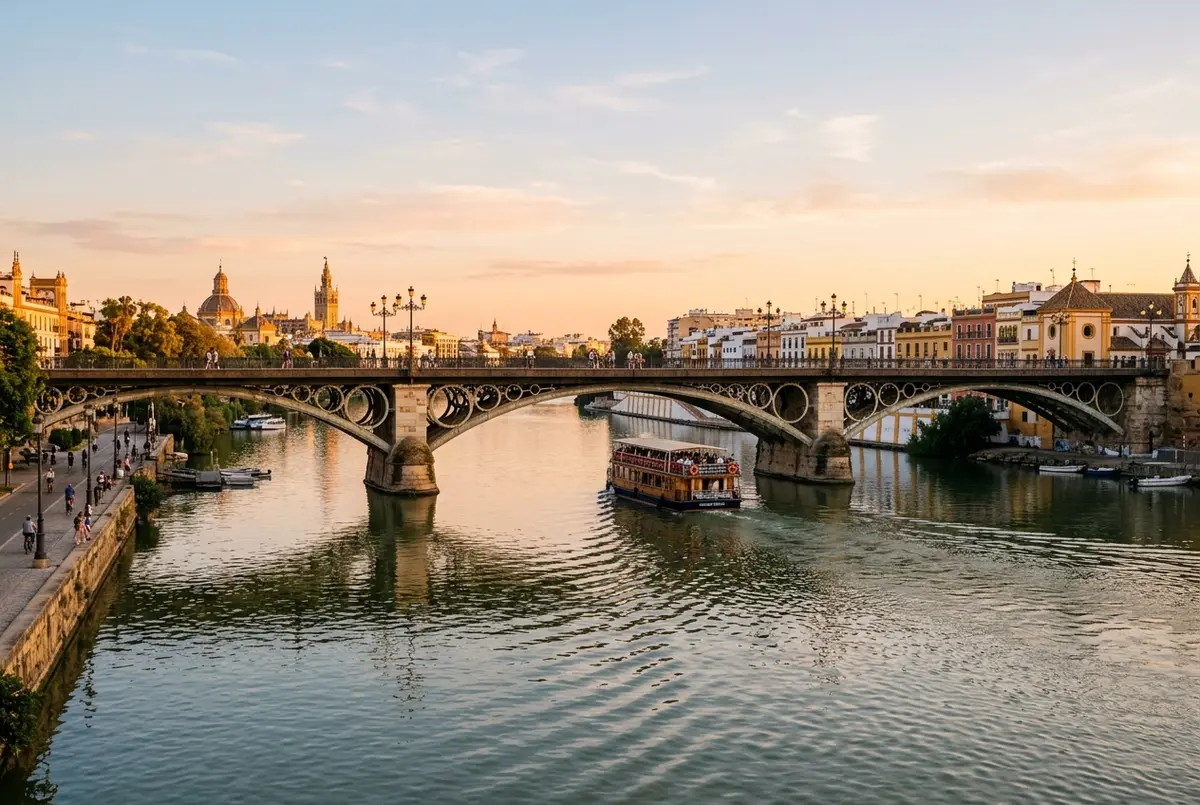
Puente de Triana, Seville? It’s the historic ironwork bridge connecting the old town to the Triana neighborhood, and it’s the one structure almost every Guadalquivir river cruise on this site passes directly underneath. Here’s what I’d actually point out as you go under it: look up at the ironwork rather than just registering “bridge,” since the detail up close is genuinely better than it looks from a distance.
I think bridges in general get treated as background scenery on a lot of river cruises, and this one specifically deserves more attention than that, both for its age and for what it actually solved for the city.
What Is the Puente de Triana?
The Puente de Triana, officially named the Puente de Isabel II, is a 19th century iron bridge spanning the Guadalquivir to connect Seville’s historic center with the Triana neighborhood. It’s one of the oldest surviving iron bridges in Spain and the structure most people simply call “the Triana bridge” rather than its formal name. I’d say the nickname has stuck harder than the official one, locals and visitors alike default to Puente de Triana almost every time.
Check prices & dates
Ready to visit?
Book your tickets in advance: popular time slots sell out.
It was built between 1845 and 1852, which genuinely surprised me the first time I looked into it, a city as old and as historically wealthy as Seville didn’t get a permanent bridge across its own river until the middle of the 19th century. Before that, crossings relied on boats and pontoon bridges that had to be rebuilt or repaired repeatedly. I’d call that one of the more interesting gaps in the city’s history, the river mattered enormously to Seville’s wealth for centuries before anyone bothered to build something permanent across it.
Why Did It Take So Long to Build a Permanent Bridge?
Mostly cost, engineering limitations of the era, and the fact that the river itself had commercial traffic that a fixed low bridge could complicate. I wouldn’t call any single reason the full explanation, it’s more that a combination of factors kept the city relying on temporary crossings for centuries longer than you’d expect from a place this historically significant. Once iron bridge engineering matured in the 19th century, the Puente de Triana became one of the earlier examples built in Spain using the technique.
What Does the Bridge’s Ironwork Actually Look Like?
Ornate, honestly, in a way that a lot of purely functional 19th century infrastructure isn’t. The ironwork carries decorative detail along the railings and support structure that I’d put well above what a modern equivalent bridge would bother with. A sightseeing cruise gives you a good angle to actually look up at the underside as you pass beneath it, which is a view you don’t get walking across the top of the bridge itself.
My honest tip is to have your camera ready a few seconds before the boat actually reaches the bridge, the best shot of the ironwork passes quickly once you’re directly underneath it.
Are There Other Historic Bridges on the Guadalquivir in Seville?
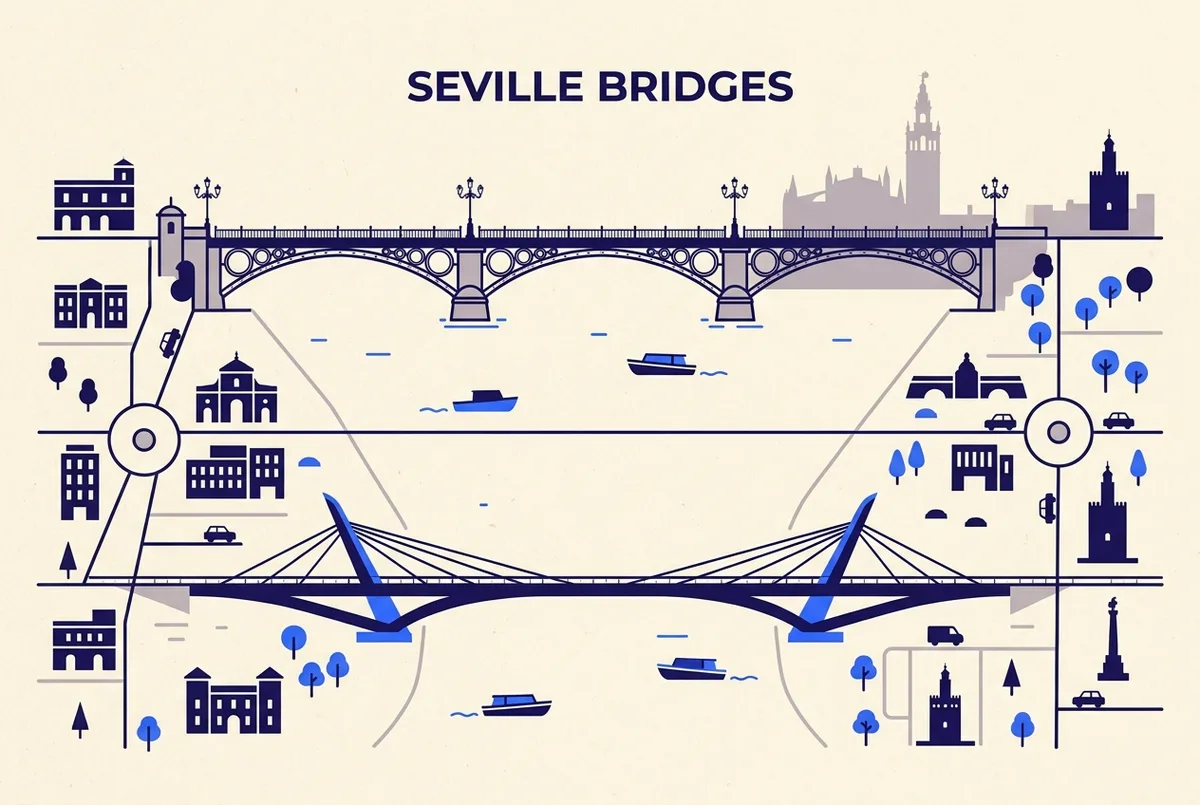
Yes, several newer bridges cross the river further out from the old town, including modern designs built decades after the Puente de Triana, some specifically for the 1992 World’s Fair. I wouldn’t call any of the newer bridges historic in the same sense, they’re interesting in their own right as modern engineering, but the Puente de Triana remains the one with the real 19th century story behind it. Whether your specific cruise passes any of the newer bridges depends on how far along the river your route actually goes.
Which Landmarks Sit on Either Side of the Puente de Triana?
The old town side gives you the Torre del Oro and the historic riverside promenade, while the Triana side opens onto the neighborhood’s own riverside strip and ceramics quarter. The Torre del Oro’s full history is worth reading if you want the story of the landmark closest to this end of the bridge, and Triana itself covers what’s actually waiting on the other bank once you cross it, whether by boat or on foot.
I’d say the bridge genuinely earns its spot as the hinge point of the whole landmarks route, everything else on this river sits on one side of it or the other.
Does Every River Cruise Actually Pass Under This Bridge?
Most of them, yes, since it sits close to the main departure docks and connects two stretches of riverbank that nearly every sightseeing route covers. I would not assume every single product passes under it, though, the shortest or most route-limited cruises occasionally stick to one side, so it’s worth a glance at the specific route description if seeing this bridge up close matters to you.
Did the Bridge Change How the City Itself Developed?
I think so, yes, in a fairly direct way. Once a permanent crossing existed, Triana stopped being quite as separate from the rest of the city in daily life, foot and cart traffic no longer depended on boats or a temporary pontoon that could be out of service for repairs. I wouldn’t call the bridge solely responsible for Triana’s later growth, but it’s hard to imagine the neighborhood developing the way it did without a reliable, permanent link to the old town sitting right there.
That’s part of why I’d treat this bridge as more than just a nice photo opportunity from the water, it genuinely changed the practical relationship between the two halves of the city it connects.
Is the Bridge Still Used for Regular Traffic Today?
Yes, it’s a functioning road bridge carrying regular vehicle and pedestrian traffic between the old town and Triana, not a preserved monument closed off to use. I think that’s part of what makes it a genuinely good landmark rather than a museum piece, you’re looking at a 170 plus year old structure that the city still relies on every single day.
Is It Worth Stopping on the Bridge Itself Before or After Your Cruise?
Yes, I’d genuinely recommend it. Walking across the Puente de Triana on foot, rather than only passing under it by boat, lets you stop partway and look down the river in both directions, toward the Torre del Oro one way and toward Triana’s rooftops the other. It’s a free, five minute detour that gives you a completely different perspective from the water level view your cruise provides. I wouldn’t skip it just because you’ve already seen the bridge from below, the two views genuinely don’t overlap much.
My honest habit is to cross it once heading into Triana and once heading back, just for the different light and the different direction of view each way.
What Else Is Nearby If You Want to See More of the River’s History?
The full landmarks guide for this river ties this bridge together with the Torre del Oro, Triana, and the Expo ‘92 pavilions further along, if you want the complete picture rather than just this one structure. I’d read it before your cruise if any of these landmarks genuinely interest you, recognizing each one as you pass beats trying to piece it together afterward.
My Honest Take on the Puente de Triana
I’d call it the most quietly impressive landmark on this whole stretch of river, precisely because so few visitors realize how old it actually is or how long the city went without a proper crossing before it was built. The ironwork alone is worth a close look as your boat passes underneath, and knowing the bridge’s backstory makes that brief moment feel like more than just passing under a random structure.
Frequently Asked Questions
What is the official name of the Puente de Triana?
Puente de Isabel II, though almost everyone, locals included, calls it the Puente de Triana after the neighborhood it connects to.
When was the Puente de Triana built?
Between 1845 and 1852, making it one of the oldest surviving iron bridges in Spain and the first permanent crossing of the Guadalquivir in Seville.
Do river cruises actually pass under the Puente de Triana?
Yes, most Guadalquivir sightseeing cruises on this site pass directly beneath it, since it connects two stretches of riverbank nearly every route covers.
Is the Puente de Triana still used for regular traffic?
Yes, it carries normal vehicle and pedestrian traffic between the old town and Triana today, it isn’t a closed off historic monument.
What did people use to cross the river before the bridge was built?
Boats and temporary pontoon bridges, which needed frequent rebuilding, for centuries before the permanent iron bridge finally opened in 1852.
Did the Puente de Triana change how the city developed?
Yes, in a real way. A permanent crossing meant Triana was no longer cut off by unreliable boats or a temporary pontoon, which helped the neighborhood grow closer into the rest of the city’s daily life.