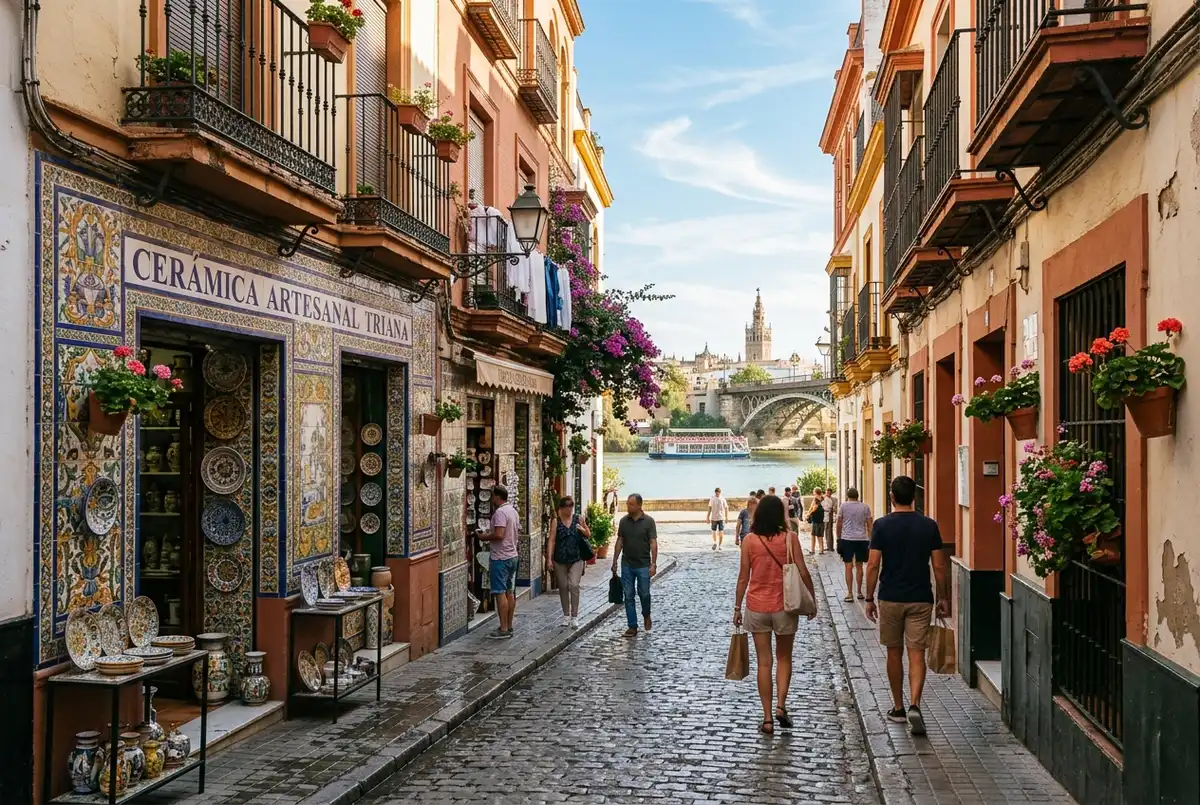
Triana, Seville? It’s the neighborhood sitting directly across the Guadalquivir from the old town, and it’s the second landmark nearly every river cruise on this site points out within the first few minutes. Here’s what I’d actually tell a friend about it: don’t just look at it from the water and move on, it’s genuinely one of the better places in the city to spend a free afternoon on foot, and most first time visitors never make it across the bridge.
I think Triana gets undersold precisely because it sits so close to the main tourist sights, it’s easy to assume you’ve already “seen” it from the boat when you really haven’t.
What Is Triana in Seville?
Triana is a historic district on the west bank of the Guadalquivir, traditionally home to sailors, boat builders, ceramics workshops, and a strong flamenco tradition that locals will tell you is older and more authentic than the versions performed for tourists in the old town. I’d describe it as the working neighborhood that quietly built and supplied the city across the river, rather than the one that financed the cathedrals and palaces.
Why Is Triana Known for Ceramics?
Because Triana has been a center of Spanish ceramic production for centuries, with tile and pottery workshops that supplied decorative work across Andalusia, including some of the tiled facades you’ll see elsewhere in Seville. Walking the Calle Alfarería today still turns up working studios and shopfronts covered in the same colorful tile patterns the neighborhood is known for. I’d genuinely recommend browsing a shop or two here over buying a generic souvenir elsewhere in the city, since this is closer to where the craft actually comes from.
What Is Triana’s Connection to Flamenco?
Triana has a strong historical claim as one of flamenco’s birthplaces, tied to the neighborhood’s working class roots and its mix of cultures over the centuries. I wouldn’t wade too deep into the specific historical debates here, flamenco’s exact origins are genuinely contested among historians, but I’d say the neighborhood’s pride in the art form is real and worth respecting if you catch a performance here rather than a more tourist oriented show elsewhere.
What Can You See in Triana From a River Cruise?
Mostly rooftops, church towers, and the riverside promenade along Calle Betis, the strip of bars and restaurants that faces the water directly across from the old town skyline. The Torre del Oro and the historic bridges sit almost directly across from this stretch, so you’ll likely be looking at both banks within the same couple of minutes of your cruise. I would not say the boat shows you much of the ceramics quarter itself, that’s set back a few streets from the water, which is exactly why I think Triana deserves a return visit on foot.
What Should You Actually Do in Triana?
I’d walk Calle Alfarería for the ceramics shops, grab a drink or a plate of fried fish along Calle Betis while looking back at the old town skyline, and poke into the Mercado de Triana, a covered market built into the old Castillo de San Jorge site, for a sense of daily neighborhood life rather than a staged tourist experience. None of this needs advance booking, it’s the kind of neighborhood that rewards wandering more than following a strict itinerary.
My honest favorite is the Calle Betis stretch at golden hour specifically, the view back across the river toward the Torre del Oro and the old town is one of the better free sights in the whole city.
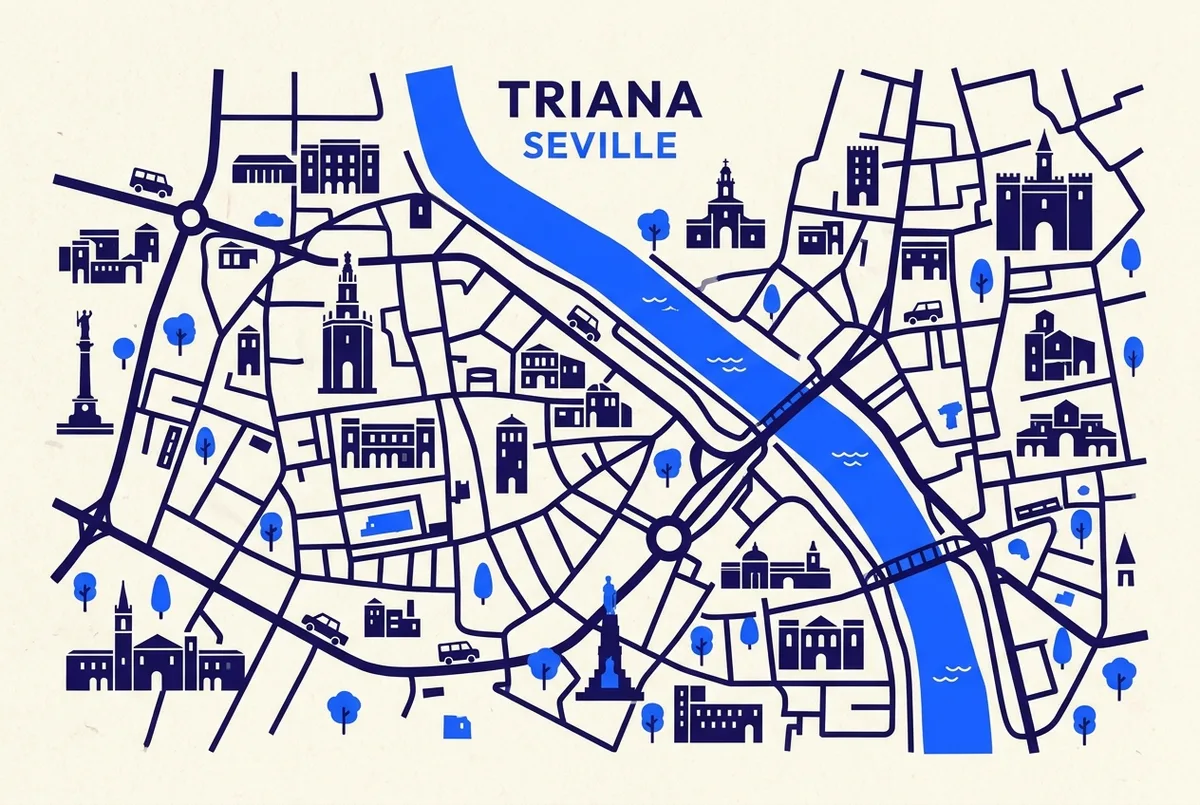
Is Triana Safe and Easy to Visit for a Tourist?
Yes, genuinely, I’d put it among the more comfortable neighborhoods in Seville for a visitor to wander without a specific plan. It’s a lived in, working neighborhood rather than a nightlife district with the usual late night concerns that can come with that, and the main riverside strip and market area stay busy and well populated through the day and into the evening. I wouldn’t treat it with any more caution than the old town itself, honestly, the main difference is simply that it’s less crowded with tourists.
My honest advice is to just start walking once you cross the bridge rather than mapping out a strict route, Triana rewards wandering more than most neighborhoods I’d point you toward in this city.
How Do You Get to Triana From the Old Town?
On foot, across the Puente de Triana, the historic ironwork bridge connecting the two banks, usually a walk of ten to fifteen minutes from the cathedral area depending on exactly where you start. The bridge itself has its own story worth knowing before you cross it, since it was the first permanent link between these two neighborhoods after centuries of relying on boats. I would not bother with a taxi for this distance, it’s an easy, flat, scenic walk that’s honestly part of the experience.
Is Triana Touristy or Still a Real Neighborhood?
Genuinely still a real neighborhood, in my experience, more so than a lot of the old town’s most visited streets. There’s tourism here, certainly, Calle Betis has plenty of English menus, but you’re also walking past actual homes, working ceramics studios, and a market that locals use for daily shopping rather than one built purely for visitors. I’d say that’s exactly why it’s worth the walk, it feels like a different texture of Seville than the cathedral and Alcázar area.
What’s the Best Time of Day to Visit Triana?
Late afternoon into evening, honestly, is my own preference, since the Calle Betis strip really comes alive once the heat of the day eases off and people start settling in for drinks along the water. The ceramics shops, on the other hand, keep more normal daytime hours, so I’d plan a morning or early afternoon pass through the Calle Alfarería shops before shifting toward the river for the evening. I wouldn’t force both into the same couple of hours, Triana genuinely rewards a slower, split visit over a single rushed loop.
If you’re coming straight from a river cruise that already showed you the rooftops from the water, I’d treat that as your cue to cross the bridge properly rather than ticking the neighborhood off your list.
What If You Only Have Time to See Triana From the Boat?
That’s still worth something, honestly, you’ll get the classic view of the neighborhood’s rooftops and bar strip against the water, and a sense of how the city is genuinely split into two distinct halves by this river. I’d just be honest with you that it’s a smaller slice of what Triana actually offers than walking across the bridge yourself. The full landmarks guide covers everything else you’ll see on the same cruise if Triana is just one stop among several for you.
Does the Expo ‘92 Site Connect to Triana at All?
Not directly, they’re on different stretches of the riverbank, though both sit on the same general side of the river heading away from the old town. The Expo ‘92 pavilions are a modern, repurposed fairground further along, a completely different chapter of the city’s history from Triana’s much older ceramics and flamenco roots. I wouldn’t try to combine a visit to both into the same short walk, they’re genuinely a fair distance apart on foot.
Want to Explore Triana on Two Wheels Instead?
If walking isn’t your preference, a bike or segway tour along the riverside path covers a similar stretch at a faster pace and from ground level rather than from the water. A bike tour along this route is worth a look if you’d rather pedal through Triana after seeing it from the boat than walk the whole thing.
My Honest Take on Triana
I’d put it near the top of my list for a free afternoon in Seville, specifically because so few first time visitors bother crossing the bridge. The ceramics, the flamenco history, and the riverside view back toward the Torre del Oro all add up to a neighborhood that genuinely rewards a slower look, not just a wave from a passing boat.
Frequently Asked Questions
Is Triana part of Seville’s old town?
No, it’s a separate district across the Guadalquivir, traditionally more working class and craft focused than the cathedral area on the other bank.
What is Triana famous for?
Ceramics and tile production, a strong flamenco tradition, and the riverside Calle Betis strip of bars facing the old town skyline.
Can you see Triana from a Guadalquivir river cruise?
Yes, most cruises on this site pass directly in front of it, giving a clear view of the rooftops and riverside promenade from the water.
About ten to fifteen minutes across the Puente de Triana bridge from the cathedral area, an easy, flat, scenic walk.
Is Triana worth visiting if you’re short on time in Seville?
Yes, I’d prioritize it over several other sights if you have even half a free afternoon, it’s a genuinely different texture of the city than the old town.
Is Triana a safe neighborhood for tourists to walk around?
Yes, it’s a lived in, working neighborhood that stays busy through the day and evening, and I wouldn’t treat it with any more caution than the old town.
catch the seville boat tour view of Triana from the water →